Audhelia in India
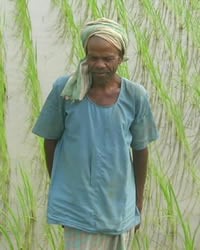
Photo Source:
Iamg - Wikimedia
Creative Commons
|
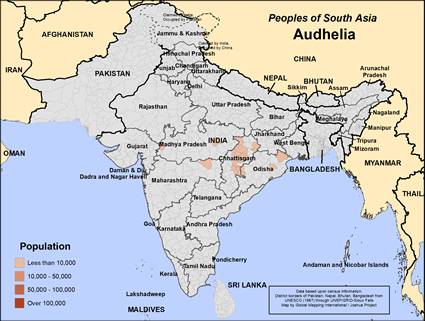
Map Source:
People Group data: Omid. Map geography: UNESCO / GMI. Map Design: Joshua Project.
|

| People Name: | Audhelia |
| Country: | India |
| 10/40 Window: | Yes |
| Population: | 7,100 |
| World Population: | 7,100 |
| Primary Language: | Chhattisgarhi |
| Primary Religion: | Hinduism |
| Christian Adherents: | 0.00 % |
| Evangelicals: | 0.00 % |
| Scripture: | Complete Bible |
| Ministry Resources: | Yes |
| Jesus Film: | Yes |
| Audio Recordings: | Yes |
| People Cluster: | South Asia Dalit - other |
| Affinity Bloc: | South Asian Peoples |
| Progress Level: |

|
Introduction / History
The Audhelia (also spelled Audheliya) are a small caste group found primarily in central India, particularly in regions such as Chhattisgarh and surrounding areas. They are considered a mixed-origin community, with traditions claiming descent from a Rajput lineage combined with lower-caste ancestry.
Historically, the Audhelia have been identified by their traditional occupation of pig rearing, which contributed to their low social standing within the caste hierarchy. Over time, some have moved away from this occupation, seeking other forms of livelihood and social mobility.
What Are Their Lives Like?
Traditionally, many Audhelia families were involved in raising pigs, though some have shifted into agricultural labor or small-scale farming. Their work is typically labor-intensive and tied to rural environments, with limited access to broader economic opportunities.
Their social structure includes clan divisions that regulate marriage, and they follow rules such as avoiding marriage within the same clan. In some cases, social customs are unusually strict—even within the caste—such as restrictions around shared meals, where individuals may prepare their own food during gatherings.
Family life is shaped by traditional practices, with early marriage historically present, though this is gradually changing in some areas. Community identity remains strong, reinforced through shared customs and local traditions.
What Are Their Beliefs?
The Audhelia people practice Hinduism. Their religious life includes devotion to deities such as Dulha Deo and local goddesses, along with participation in major Hindu festivals like Holi.
Their beliefs also include ritual sacrifices and traditional practices tied to local spiritual systems. This reflects a blend of mainstream Hindu worship with localized and folk religious elements, including reverence for spiritual forces and ritual observances connected to community life.
What Are Their Needs?
The Audhelia face both social and spiritual challenges. Historically low status and association with stigmatized occupations have contributed to marginalization and limited economic mobility. Many continue to rely on labor-intensive work with few opportunities for advancement.
Spiritually, they have little exposure to the gospel and limited access to biblical teaching. Their religious framework—rooted in Hinduism and local traditions—creates barriers to understanding the message of Christ. Because they are a small and often overlooked community, they require intentional, long-term engagement that combines practical care with clear gospel witness.
Prayer Points
Pray that the Audhelia people would come to understand the truth of the gospel and turn to Jesus Christ in faith.
Ask God to raise up faithful workers who will go to the Audhelia with humility, perseverance, and love.
Pray that the Audhelia would be adopted through the People Group Adoption program, leading to sustained prayer and intentional gospel outreach.
Pray that those who come to faith would grow in spiritual maturity and begin to disciple others within their community.