Tsimihety in Madagascar
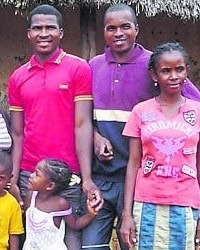
Photo Source:
Evangelical Times
|
Send Joshua Project a map of this people group.
|
| People Name: | Tsimihety |
| Country: | Madagascar |
| 10/40 Window: | No |
| Population: | 2,672,000 |
| World Population: | 2,672,000 |
| Primary Language: | Malagasy, Tsimihety |
| Primary Religion: | Ethnic Religions |
| Christian Adherents: | 25.00 % |
| Evangelicals: | 1.93 % |
| Scripture: | Portions |
| Ministry Resources: | No |
| Jesus Film: | Yes |
| Audio Recordings: | Yes |
| People Cluster: | Malagasy |
| Affinity Bloc: | Malay Peoples |
| Progress Level: |

|
Introduction / History
The Tsimihety people of Madagascar live primarily in the north-central region of the island, in an area of hills, valleys, and scattered settlements. Their name means "those who never cut their hair," a phrase that reflects their long-standing resistance to domination and their desire for independence from outside rulers.
Historically, they migrated inland from the eastern coast, seeking refuge from conflict and slave raids. Unlike many other ethnic groups in Madagascar, the Tsimihety did not develop a centralized political system. Instead, they organized themselves around family ties rather than kings or formal authority structures.
Over time, they came under the rule of larger powers on the island and later under French colonial control, yet their identity has remained strongly shaped by independence and local autonomy.
What Are Their Lives Like?
The Tsimihety traditionally live in small villages scattered across fertile valleys and upland areas. Their communities are often built around extended family networks, and daily life is closely tied to agriculture and livestock. Rice is a staple crop, and cattle play an important role both economically and socially.
Because of population growth and customary marriage patterns, many Tsimihety families have expanded into neighboring regions in search of land and pasture. Others work seasonally on plantations, such as coffee or tobacco farms, to support their households.
Their lifestyle emphasizes practicality and survival. Crafts and daily activities are generally simple and functional, and community cooperation helps families endure the challenges of rural life. Kinship ties are strong, and relationships are often defined by family loyalty rather than formal leadership or social hierarchy.
What Are Their Beliefs?
The Tsimihety worldview is shaped by a blend of traditional beliefs and Christian influence. Most hold to a form of Christianity, but this is often mixed with older practices centered on spirits and ancestors.
A belief in a supreme creator exists, yet daily spiritual life is focused more on honoring ancestors, who are thought to remain actively involved in the lives of the living. These ancestral spirits are associated with specific places, especially family burial sites, and are approached through rituals and offerings.
Traditional medicine, spiritual specialists, and protective practices are commonly used. Although Christian teaching has been present for many years, spiritual understanding is often divided between biblical truth and inherited customs, limiting clear commitment to Christ.
Scripture has been translated into forms of the Malagasy language, including dialects understood by the Tsimihety, providing an important foundation for further discipleship.
What Are Their Needs?
The Tsimihety people need a deeper and more personal understanding of the gospel that transforms both belief and daily life. While many identify with Christianity, traditional practices connected to ancestor reverence continue to shape their thinking and decisions.
There is a strong need for consistent biblical teaching and discipleship that helps believers follow Christ fully rather than blending faith with older traditions. Local leaders who are grounded in Scripture and able to teach others are especially needed.
Rural isolation and economic challenges also affect their communities, making access to education, healthcare, and spiritual resources uneven. Strengthening the church within these villages would have a lasting impact across the region.
Prayer Points
Pray that Tsimihety believers will grow in their understanding of scripture and embrace the full authority of Jesus Christ.
Ask God to raise up strong local leaders who will disciple others and guide their communities in truth.
Pray for freedom from fear and reliance on ancestral practices that hinder a close relationship with Christ.
Lift up families living in rural areas, asking the Lord to provide for their physical needs and strengthen their unity.
Pray that the Tsimihety church will become a light in Madagascar, sharing the gospel with neighboring peoples.