Terena in Brazil
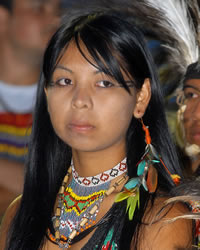
Photo Source:
Valter Campanato/Agência Brasil - Wikimedia
Creative Commons
|
Send Joshua Project a map of this people group.
|

| People Name: | Terena |
| Country: | Brazil |
| 10/40 Window: | No |
| Population: | 27,000 |
| World Population: | 27,000 |
| Primary Language: | Terena |
| Primary Religion: | Ethnic Religions |
| Christian Adherents: | 45.00 % |
| Evangelicals: | 20.00 % |
| Scripture: | New Testament |
| Ministry Resources: | Yes |
| Jesus Film: | No |
| Audio Recordings: | Yes |
| People Cluster: | South American Indigenous |
| Affinity Bloc: | Latin-Caribbean Americans |
| Progress Level: |

|
Introduction / History
The Terena are an Indigenous people originally connected to the Guaná groups of the Paraguayan Chaco. Over time, conflict and displacement led them from their earlier homeland west of the Paraguay River into what is now the Brazilian state of Mato Grosso do Sul. They later settled in the Aquidauana–Miranda region and surrounding areas, forming a network of villages and communities.
Their history includes periods of upheaval, including involvement in regional conflicts such as the Paraguayan War, which caused further movement and disruption to their communities. Despite these challenges, the Terena have maintained a strong sense of identity and continuity, adapting to changing circumstances while preserving many aspects of their communal life.
What Are Their Lives Like?
Terena communities today are found mainly in Mato Grosso do Sul, with some families living in neighboring states. Their lands are often divided into small, scattered reserves surrounded by ranches and farms. Traditionally skilled in agriculture, the Terena developed farming systems suited to the wetland and savanna landscapes of the region. Their long practice of agroforestry and land stewardship continues to influence community life, including efforts to revive and strengthen traditional agricultural knowledge.
Daily life blends traditional practices with modern realities. Families may cultivate manioc, corn, and fruit trees, while also participating in regional labor opportunities. Many Terena communities maintain close social ties, gathering for festivals, meetings, and communal decision?making. Social resilience and adaptation are longstanding features of Terena society.
What Are Their Beliefs?
According to available information, the primary religious identity among the Terena is rooted in traditional ethnic religion, with Christianity also present in various communities. Some local traditions and ceremonies continue to carry cultural significance, though details vary between villages.
What Are Their Needs?
The Terena would benefit from continuing opportunities for biblical discipleship and strong local Christian leadership. Many communities face pressure from limited land, environmental challenges, and economic constraints. Stable support for families, clear teaching rooted in God's word, and encouragement for young people are all important for long?term spiritual growth.
Efforts to preserve and revitalize traditional agricultural practices show a desire for self?sufficiency and community well-being. As believers grow in faith, they can draw upon both their cultural strengths and the truth of scripture to bless their communities and share Christ with neighboring peoples.
Prayer Points
Pray for Terena believers to grow in their knowledge of scripture and in mature, Christ?honoring faith.
Pray for church leaders and teachers to be strengthened in wisdom and perseverance as they serve their communities.
Pray for Terena families to experience unity and hope in Christ amid ongoing social and environmental pressures.
Pray that Terena Christians develop a vision for sharing the gospel with unreached Indigenous communities in Brazil.