Quiche, Sacapulteco in Guatemala
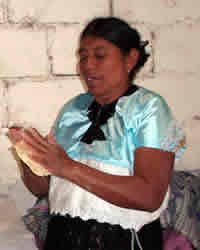
Photo Source:
Lon&Queta - Flickr
Creative Commons
|
Send Joshua Project a map of this people group.
|
| People Name: | Quiche, Sacapulteco |
| Country: | Guatemala |
| 10/40 Window: | No |
| Population: | 14,000 |
| World Population: | 14,000 |
| Primary Language: | Sakapulteko |
| Primary Religion: | Christianity |
| Christian Adherents: | 95.00 % |
| Evangelicals: | 7.00 % |
| Scripture: | Portions |
| Ministry Resources: | No |
| Jesus Film: | No |
| Audio Recordings: | Yes |
| People Cluster: | Maya |
| Affinity Bloc: | Latin-Caribbean Americans |
| Progress Level: |

|
Introduction / History
The Sacapulteco Quichua are a Maya people of the Guatemalan highlands, living primarily in and around the municipality of Sacapulas in the department of El Quiché, with a smaller community in Guatemala City. Their language is Sakapulteko, a K'ichean Mayan tongue related to but distinct from the more widely spoken K'iche'. The name Sacapulas is believed to derive from the Nahuatl words for "white mound," a reference to the mineral-rich salt flats that have defined this community's identity for more than a thousand years.
According to their own oral history preserved in the Titulo of Sacapulas, the Sacapulteco Quichua trace their origins to one of seven original peoples who journeyed from a distant land to settle at the Chixoy River valley. Their ancestor, the Ahau Canil, guided them to the salt springs, and the people were entrusted with the work of salt production for generations to come. This origin account, though recorded during the colonial period, reflects an oral tradition far older and reveals the deep spiritual connection these people hold to their land and its resources.
Spanish conquest arrived in the region in the 1520s and 1530s. The Sacapulas area became a site of fierce resistance by neighboring peoples before Spanish military forces ultimately prevailed. Dominican friars later entered the area to establish a mission presence. The centuries that followed brought the imposition of colonial rule, periods of political upheaval, and the devastating violence of Guatemala's civil war in the twentieth century, during which Sacapulas and the surrounding region suffered bombings and massacres. Despite this long history of disruption, the Sacapulteco Quichua have maintained their community and their identity.
What Are Their Lives Like?
Agriculture anchors daily life for the Sacapulteco Quichua. Corn is both a staple crop and a cultural cornerstone—families subsist largely on tortillas, beans, and chiles, with corn cultivation stretching back millennia in the highland Maya world. The Chixoy River valley provides fertile land, and many families depend on what the land yields for survival. Small-scale commerce and trade have also long been important, with the local market at Sacapulas serving as a gathering point for buying, selling, and community connection.
The production of black salt from the salt flats along the Chixoy River has been central to the Sacapulteco identity since precolonial times. This work, once carried out by most of the community, now rests in the hands of only a few elders. Flooding from the river has steadily reduced the usable salt beach, placing the continuation of this practice in serious jeopardy.
Family life follows patterns common among Maya highland peoples, with extended family networks providing economic support and social cohesion. Women are the weavers and caretakers of the household; their hand-woven textiles carry patterns that express community belonging and cultural memory. Celebrations mark the agricultural cycle and the Catholic feast days that became part of community life during the colonial era, bringing together music, food, and communal ceremony.
What Are Their Beliefs?
Christianity is the primary religion of the Sacapulteco Quichua, with much of the community identifying with the Christian faith. Roman Catholicism took root during the colonial period through Dominican and Franciscan missionary activity and remains a significant presence. A smaller number of believers identify as evangelical Christians. A minority of the community continues to practice ethnic religion, a Mayan worldview in which spiritual forces govern the natural world and ritual specialists mediate between the human and sacred realms.
In practice, the lines between Catholic observance and traditional Mayan spirituality have often blurred, producing a form of popular religion that carries elements of both. Despite the broad Christian identification of the community, evangelical believers represent a smaller portion, suggesting that many who call themselves Christian may have limited grounding in biblical faith. The New Testament has not been fully translated into Sakapulteko, and resources in the heart language remain limited.
What Are Their Needs?
Access to the complete Scriptures in Sakapulteko remains an urgent need—only portions of the Bible have been translated, and the New Testament is not yet available in written form. The ancient salt-making heritage of Sacapulas is at risk of being lost entirely as floods continue to erode the salt beach and the few remaining practitioners age without successors. Rural communities in the Sacapulas region have limited access to quality healthcare and are vulnerable to natural disasters, including the floods that recur along the Chixoy River. Young people face the pressure of cultural assimilation and migration to cities, where connection to community, language, and faith can weaken without intentional support.
Prayer Points
Pray that Sakapulteko Bible translation efforts would be renewed and completed, giving the Sacapulteco Quichua access to God's word in their heart language.
Pray that evangelical believers among the Sacapulteco Quichua would grow in depth and conviction, and that the larger nominally Christian community would come to a genuine, transforming faith in Jesus Christ.
Pray that Sacapulteco Quichua Christians would sense a calling to carry the gospel to peoples and communities around them that have not yet heard—becoming cross-cultural witnesses themselves.
Pray for protection from flooding and natural disaster, and for wise leadership that would preserve the community's land, livelihoods, and cultural heritage for future generations.