Palue in Indonesia
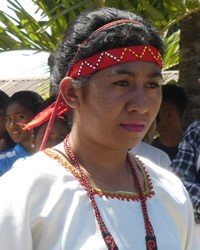
Photo Source:
Anonymous
|
Send Joshua Project a map of this people group.
|
| People Name: | Palue |
| Country: | Indonesia |
| 10/40 Window: | Yes |
| Population: | 14,000 |
| World Population: | 14,000 |
| Primary Language: | Palu'e |
| Primary Religion: | Christianity |
| Christian Adherents: | 85.00 % |
| Evangelicals: | 3.00 % |
| Scripture: | Translation Started |
| Ministry Resources: | No |
| Jesus Film: | No |
| Audio Recordings: | Yes |
| People Cluster: | Flores-Sumba-Alor |
| Affinity Bloc: | Malay Peoples |
| Progress Level: |

|
Introduction / History
The Palue (also known as Palu'e or Lu'a) are a small Austronesian people group inhabiting the volcanic island of Palue (Pulau Palue), located approximately 20 kilometers north of the central coast of Flores in Sikka Regency, East Nusa Tenggara province, Indonesia. They speak the Palu'e language, a distinct Central Malayo-Polynesian language with no close relatives on mainland Flores and limited mutual intelligibility with neighboring languages such as Sikka or Lio. The Palue maintain a strong island-bound identity shaped by their isolation, maritime traditions, and unique cultural practices.
Historically, the Palue lived in clan-based villages governed by adat leaders and followed animistic beliefs centered on ancestral spirits, sacred places, and harmony with the volcanic environment. Portuguese contact in the 16th–17th centuries left little direct impact, but Dutch colonial administration in the early 20th century was followed by intensive Catholic missionary work by the Society of the Divine Word (SVD). This led to widespread conversion to Roman Catholicism, which became deeply integrated into Palue life while preserving many pre-Christian customs. The island's remoteness has helped retain much of their traditional worldview even today.
What Are Their Lives Like?
The Palue reside in eight coastal and hillside villages on the steep, water-scarce island of Palue, where they depend on subsistence farming, fishing, and animal husbandry. Families cultivate dry-land crops such as corn, cassava, bananas, coconuts, and candlenuts on terraced slopes, while men fish from wooden boats for tuna, mackerel, and reef species using nets and lines. Goats, pigs, and chickens provide meat and serve as measures of wealth for ceremonies. There are no roads or motor vehicles on the island; travel is by foot or small boat.
Family dynamics emphasize extended clans living in clustered wooden houses with thatched roofs, where elders guide marriage alliances (often involving bridewealth) and resolve disputes through adat councils. Celebrations include major Catholic feasts such as Christmas and Easter with processions, choirs, and communal meals, alongside life-cycle events like weddings featuring traditional dances, drumming, and woven textiles. Food centers on corn or cassava porridge accompanied by fish, goat curry, vegetables, and coconut, shared in large family gatherings that reinforce bonds and hospitality.
What Are Their Beliefs?
The Palue are followers of Roman Catholicism, with faith expressed through regular mass attendance, sacraments, parish feasts, and devotion to saints. Churches and chapels dot every village, and priests (often from Flores mainland) lead vibrant liturgical life enriched by local choirs and youth groups. While Catholicism forms the core of spiritual identity, many Palue continue to honor ancestral customs such as offerings at sacred springs or rituals for protection from volcanic activity, viewing these through a Christian lens that acknowledges God's sovereignty over creation and the spirit world.
What Are Their Needs?
Access to fresh water remains a daily challenge on the arid, volcanic island, where rainfall is unpredictable and springs are limited, forcing families to collect and ration carefully. Healthcare and education beyond primary level require risky boat trips to Maumere on Flores, leaving many vulnerable to illness and limiting opportunities for youth. Economic options are scarce, with dependence on subsistence crops and fishing made difficult by soil erosion, overfishing, and climate variability. The Palu'e language is spoken by all generations but shifting toward Indonesian among the young, reducing mother-tongue engagement with scripture and cultural transmission.
Spiritually, while churches are present, deeper biblical discipleship, leadership training for local catechists, and resources in the Palu'e language would strengthen believers and equip them to reach neighboring islands more effectively.
Prayer Points
Praise the Lord for the faithful Catholic heritage among the Palue and pray that their devotion would deepen into vibrant, personal relationship with Jesus Christ as Savior and Lord.
Ask God to raise up Palue pastors, catechists, and youth leaders filled with the Holy Spirit to disciple families and plant multiplying fellowships across the island.
Pray for revival in Palue churches, that believers would experience fresh encounters with the living God and become passionate witnesses throughout East Nusa Tenggara.
Intercede for complete Bible translation and the JESUS Film in the Palu'e language, that God's word would take root in the hearts of every generation.
Pray for practical provision of reliable water systems, improved clinics, schools, and sustainable agriculture.
Ask the Father to protect Palue families from isolation and hardship, blessing them with unity and a vision to send missionaries to unreached coastal peoples nearby.