Martu Wangka in Australia
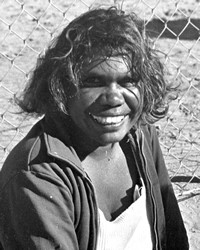
Photo Source:
Anonymous
|
Send Joshua Project a map of this people group.
|
| People Name: | Martu Wangka |
| Country: | Australia |
| 10/40 Window: | No |
| Population: | 1,200 |
| World Population: | 1,200 |
| Primary Language: | Martu Wangka |
| Primary Religion: | Christianity |
| Christian Adherents: | 60.00 % |
| Evangelicals: | 30.00 % |
| Scripture: | Portions |
| Ministry Resources: | No |
| Jesus Film: | No |
| Audio Recordings: | Yes |
| People Cluster: | Australian Aboriginal |
| Affinity Bloc: | Pacific Islanders |
| Progress Level: |

|
Introduction / History
The Martu Wangka people are an Aboriginal group from the Western Desert region of Western Australia. Their name refers both to the people and to their shared language, Martu Wangka, which developed as a means of communication among several closely related desert groups. Traditionally, the Martu lived as nomadic hunter-gatherers across a vast and often harsh landscape that includes the Great Sandy, Little Sandy, and Gibson Deserts.
For countless generations, they moved across their ancestral lands following seasonal patterns, water sources, and food availability. Their deep knowledge of the desert enabled them to thrive in an environment that outsiders often consider inhospitable. Contact with Europeans came relatively late compared to coastal regions, but it brought significant disruption, including displacement and the establishment of settlements. Despite these changes, many Martu people have maintained a strong connection to their traditional lands and cultural identity.
What Are Their Lives Like?
Today, many Martu Wangka people live in remote communities such as Punmu, Parnngurr, and Kunawarritji, while others reside in regional towns. Life often blends traditional practices with modern realities. Hunting remains culturally important, especially for kangaroo, goanna, and bush foods, and it continues to provide both nourishment and a sense of identity. Women often gather seeds, fruits, and edible plants, drawing on knowledge passed down through generations.
Art has become a significant expression of Martu culture, with many individuals contributing to well-known Western Desert art movements. Through painting, they communicate stories tied to land, ancestry, and spiritual heritage. Community life is shaped by extended family relationships, where cooperation and mutual care are essential.
Martu Wangka is widely spoken within the community, though English is also used, particularly in education and interaction with the broader society. Maintaining the language is an important part of preserving their identity, even as younger generations navigate influences from outside the desert.
What Are Their Beliefs?
Traditionally, the Martu Wangka people hold beliefs rooted in a spiritual understanding of the land and its creation. Their worldview includes ancestral beings and spiritual forces that shaped the environment and continue to influence life. These beliefs are often expressed through stories, ceremonies, and a strong sense of connection to specific places.
According to available information, some Martu people identify with Christianity, largely due to missionary presence in the past. However, traditional beliefs and practices often continue alongside or beneath this identification. In many cases, understanding of the gospel may be limited, and Christian teaching may be mixed with older spiritual perspectives.
Scripture availability in languages accessible to the Martu provides an opportunity for clearer communication of biblical truth, though engagement with it varies.
What Are Their Needs?
The Martu Wangka people face challenges related to isolation, limited access to services, and economic constraints common in remote desert communities. Educational opportunities and healthcare access can be difficult to maintain consistently, especially for those living far from regional centers.
Spiritually, there is a need for a deeper and clearer presentation of the gospel that speaks directly to their cultural context. Where Christianity is known, it may not always be fully understood in a way that leads to personal faith and transformation. There is also a need for believers who can communicate biblical truth in the Martu Wangka language and worldview.
Developing strong local leadership within the church is essential. When leaders arise from within the community, they are better able to address questions, guide spiritual growth, and help others follow Christ faithfully.
Prayer Points
Pray that the Martu Wangka people would hear and understand the message of Jesus Christ in a way that speaks clearly to their hearts and culture.
Ask God to raise up committed local believers who can lead and disciple others with wisdom and humility.
Pray for families to grow strong in faith, with parents teaching their children the truth of Scripture.
Ask that the Bible would be accessible and meaningful in the Martu Wangka language, leading to genuine transformation.
Pray for those living in remote communities, that they would have both practical provision and spiritual encouragement.