New Caledonian French in New Caledonia
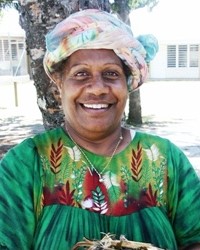
Photo Source:
atomicboy - Wikimedia
Creative Commons
|
Send Joshua Project a map of this people group.
|

| People Name: | New Caledonian French |
| Country: | New Caledonia |
| 10/40 Window: | No |
| Population: | 119,000 |
| World Population: | 122,600 |
| Primary Language: | French |
| Primary Religion: | Christianity |
| Christian Adherents: | 61.00 % |
| Evangelicals: | 3.77 % |
| Scripture: | Complete Bible |
| Ministry Resources: | Yes |
| Jesus Film: | Yes |
| Audio Recordings: | Yes |
| People Cluster: | French |
| Affinity Bloc: | Eurasian Peoples |
| Progress Level: |

|
Introduction / History
The New Caledonian French — known locally as Caldoche — are the descendants of European settlers who have made the French Pacific territory of New Caledonia their permanent home across multiple generations. New Caledonia is a French special collectivity lying in the southwestern Pacific Ocean, approximately 1,200 kilometers east of Australia, comprising the large main island of Grande Terre and several smaller island groups, including the Loyalty Islands. The territory's capital, Nouméa, is located on the southern tip of Grande Terre and serves as the economic, cultural, and administrative center of the archipelago. The New Caledonian French distinguish themselves sharply from the Zoreilles — the term used for temporary French expatriates, civil servants, and contract workers who come from metropolitan France — by emphasizing their multi-generational roots in the land. French is the official language and the everyday tongue of the New Caledonian French community, though New Caledonia also recognizes Kanak languages and the Pacific creole Bislama-related forms used in neighboring territories. The New Caledonian French are descended from several distinct waves of European settlement. The first settlers arrived after France formally annexed the archipelago in 1853, followed by the establishment of a penal colony in 1864. Convicted criminals transported from France, including participants in the Paris Commune uprising of 1871 and the Algerian Mokrani Revolt, were eventually given land grants upon completing their sentences, and their descendants form a significant strand of the New Caledonian French population, particularly around the commune of Bourail. Free settlers, farmers, miners drawn by the discovery of nickel, and ranchers followed, establishing communities on the drier western coast of Grande Terre. This colonial history, marked by the displacement of the indigenous Kanak people onto reservations and the legal advantages afforded to European settlers, continues to shape New Caledonian society and its unresolved political tensions to this day.
What Are Their Lives Like?
The New Caledonian French way of life, as observers have long noted, is deeply integrated into the cash economy and reflects a blend of French cultural heritage with distinctly Pacific and frontier influences. In the capital Nouméa — a city known for its French-style bakeries, wine shops, cafés, outdoor markets, and lively waterfront nightlife — the New Caledonian French live in a manner that is in many respects more comfortable and prosperous than the surrounding indigenous Kanak communities, with higher average incomes, better access to healthcare, and greater representation in positions of business and government. Outside the capital, many New Caledonian French families are rooted in large cattle properties and ranching operations on the western plains of Grande Terre, and the annual fair at Bourail — complete with rodeos, bull riding, and country celebrations — reflects a distinctly frontier character that has little resemblance to contemporary metropolitan France. Nickel mining has long been the economic backbone of New Caledonia, and while New Caledonian French do not dominate the mining workforce as they once did, the industry's fortunes affect the entire territory's economy and social stability. Food culture reflects the multicultural character of New Caledonia, with French cuisine available throughout Nouméa alongside Asian, Polynesian, and local specialties including freshly caught seafood, grilled venison, and the traditional Kanak dish of bougna — banana, taro, yam, and shellfish wrapped and cooked in banana leaves — which has been widely adopted across communities. The political atmosphere in New Caledonia has grown increasingly tense following the independence referendum cycle of 2018 to 2021 and the serious civil unrest that erupted in 2024, when proposed changes to electoral rules triggered widespread rioting, leaving lives lost and billions of francs of economic damage. The New Caledonian French, who have historically voted strongly in favor of remaining part of France, find themselves navigating an uncertain future as New Caledonia's political status remains deeply contested.
What Are Their Beliefs?
The New Caledonian French are nominally Catholic in their religious heritage, reflecting the centuries-long dominance of Roman Catholicism in French culture. New Caledonia is an overwhelmingly Christian, with both Catholic and Protestant traditions represented across its diverse communities. However, the New Caledonian French share in the broader trend of secularization and spiritual indifference that characterizes much of the French-speaking world. As is true of French culture more generally, a significant portion of the New Caledonian French population identifies as culturally Catholic — observing the major rites of baptism, marriage, and burial within the church — without maintaining active or regular participation in worship or personal faith. The principle of laïcité, France's deeply rooted tradition of strict separation between religion and public life, shapes the New Caledonian French outlook on faith in significant ways, contributing to a culture in which religious practice is considered a private and largely optional matter. The spiritual landscape of the New Caledonian French is therefore one of widespread nominal Christian identity alongside meaningful secularism, with the gospel present in institutional form but not always alive in personal conviction.
What Are Their Needs?
The most pressing need of the New Caledonian French is not access to the gospel in an institutional sense — churches, Bibles, and Christian tradition have been present in their community for generations — but rather a living encounter with the Jesus of scripture that moves beyond cultural inheritance and nominal affiliation. The political instability and civil unrest that have marked New Caledonia in recent years have generated genuine anxiety within the New Caledonian French community, and the path toward a just and peaceful future shared with the Kanak people requires more than political negotiation; it requires the kind of reconciliation that only the gospel can provide. The economic uncertainty caused by the troubled nickel industry and the damage inflicted by the 2024 riots has affected livelihoods across the territory, and the New Caledonian French, like all New Caledonians, face an uncertain economic horizon. Spiritually, a community with deep Christian roots, strong literacy, education, and resources has extraordinary potential to become a sending force for the gospel among the many unreached peoples of the Pacific — if that latent potential is awakened by genuine, transforming faith.
Prayer Points
Pray for a genuine spiritual awakening among the New Caledonian French — that nominal Catholic heritage would give way to living, personal faith in Jesus Christ — and that the secularism and indifference that characterize much of French-speaking culture would be broken by the power of the Holy Spirit.
Pray for peace, justice, and lasting reconciliation between the New Caledonian French and the Kanak people, that the deep wounds of colonial history would be addressed with honesty and humility, and that the church in New Caledonia would be a voice for reconciliation rather than division in a society under political strain.
Pray for the economic stability of New Caledonia as the nickel industry struggles and the territory's political future remains unresolved and pray for Christian leaders and businesspeople within the New Caledonian French community who can serve as witnesses to integrity and hope in a time of uncertainty.
Pray that the New Caledonian French — equipped with education, resources, the French language, and deep Pacific roots — would be stirred by God to invest in the evangelization of the many unreached and least-reached peoples of the Pacific basin, becoming a sending community that carries the gospel to those who have never yet had the opportunity to hear it.