Hertevin in Türkiye (Turkey)
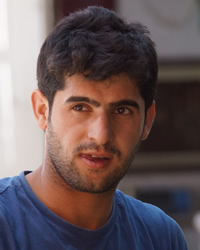
Photo Source:
CharlesFred - Flickr
Creative Commons
|
Send Joshua Project a map of this people group.
|
| People Name: | Hertevin |
| Country: | Türkiye (Turkey) |
| 10/40 Window: | Yes |
| Population: | 1,300 |
| World Population: | 1,300 |
| Primary Language: | Hertevin |
| Primary Religion: | Christianity |
| Christian Adherents: | 100.00 % |
| Evangelicals: | 0.00 % |
| Scripture: | Unspecified |
| Ministry Resources: | No |
| Jesus Film: | No |
| Audio Recordings: | No |
| People Cluster: | Assyrian / Aramaic |
| Affinity Bloc: | Arab World |
| Progress Level: |

|
Introduction / History
The Hertevin are a small Christian community whose identity is bound up with a distinct dialect of Northeastern Neo-Aramaic, a branch of the ancient Aramaic language family once spoken widely across the Fertile Crescent. Their homeland lies in Siirt Province in southeastern Türkiye, a rugged region near the Kurdish-populated southeast, where their ancestors settled as Chaldean Catholics generations ago. The Hertevin trace their spiritual and linguistic heritage back through the long history of Aramaic-speaking Christian communities of Mesopotamia, communities that survived centuries of shifting empires, religious pressure, and periodic upheaval in the region. Unlike many neighboring Aramaic-speaking Christians who emigrated abroad over the past century, the Hertevin have remained rooted in Turkey, holding on to their village life even as their language has grown increasingly rare and is now considered critically endangered by linguists who track the survival of the world's smaller tongues.
What Are Their Lives Like?
Very little specific information exists about the day-to-day life of the Hertevin, but it is reasonable to assume they live much like other rural communities of southeastern Türkiye, working the land in a region shaped by mountains, modest agriculture, and small village economies. Families in this part of the country typically rely on farming and herding, supplemented in recent decades by seasonal labor or work in nearby towns as younger generations look for opportunities beyond the village. As with other small Christian communities in the region, family and church life are likely closely intertwined, with religious feast days and family gatherings serving as central occasions for maintaining both faith and language across generations. The pressures of modernization and the dominance of Turkish in public life have made it increasingly difficult for the Hertevin to pass their heritage language on to children, a struggle shared by several other minority Christian groups in Türkiye's southeast.
What Are Their Beliefs?
The Hertevin are Chaldean Catholics, holding to a form of Catholicism that is in full communion with Rome while remaining culturally and liturgically rooted in the Middle East rather than in Western European tradition. Their theology affirms core Christian doctrines shared with evangelicals, including belief in the Trinity and confidence in the Bible as God's inspired word. At the same time, Hertevin religious practice includes the veneration of saints as intercessors before God, along with other devotional customs common to Eastern Catholic tradition. These practices place trust in intermediaries in ways that can obscure the sufficiency of Christ's mediating work on behalf of believers. This blending of genuine biblical conviction with practices that shift trust away from Christ alone reflects the broader reality faced by many ancient Christian communities in the Middle East, where centuries of tradition can sometimes stand alongside, rather than fully in step with, the gospel's call to trust in Jesus alone for salvation.
What Are Their Needs?
The Hertevin need continued support in preserving their endangered language, which is at serious risk of disappearing within a generation or two without active efforts at documentation and transmission. As a small minority community in a region that has experienced significant political and economic strain, they likely also face practical needs common to rural southeastern Türkiye, including limited economic opportunity and pressure to migrate toward larger cities. Spiritually, the Hertevin need a deepened focus on Jesus Christ himself as the sole mediator between God and humanity, moving beyond reliance on saints and inherited tradition toward a direct, personal trust in the finished work of Christ.
Prayer Points
Pray that the Holy Spirit will draw Hertevin believers to trust in Jesus Christ alone.
Pray for the preservation of the Hertevin language and Christian heritage.
Pray for Hertevin disciples who will raise up more disciples within their community.
Pray that Hertevin Christ-followers will carry the gospel to their Turkish and Kurdish neighbors.