Arab, Egyptian general in Bahrain
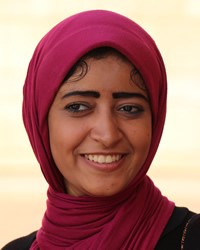
Photo Source:
Terry Feuerborn - Flickr
Creative Commons
|
Send Joshua Project a map of this people group.
|
| People Name: | Arab, Egyptian general |
| Country: | Bahrain |
| 10/40 Window: | Yes |
| Population: | 97,000 |
| World Population: | 75,623,300 |
| Primary Language: | Arabic, Egyptian |
| Primary Religion: | Islam |
| Christian Adherents: | 0.00 % |
| Evangelicals: | 0.00 % |
| Scripture: | Complete Bible |
| Ministry Resources: | Yes |
| Jesus Film: | Yes |
| Audio Recordings: | Yes |
| People Cluster: | Egyptian |
| Affinity Bloc: | Arab World |
| Progress Level: |

|
Introduction / History
Egypt was one of the world's great ancient civilizations. Dynasties of pharaohs ruled Egypt from 3200 B.C. to 341 B.C. Egypt fell to the Persian Arab Muslim conquest in 640 A.D. Arabs, who introduced Islam and the Arabic language to Egypt in the seventh century, ruled for the next six centuries. Ottoman Turks conquered the country in 1517.
After the completion of the Suez Canal in 1869, Egypt became an important transportation hub but fell heavily into debt. To protect its investments, Britain seized control of Egypt from 1882 until 1914. They granted full sovereignty to Egypt after World War II.
Egypt is the most rapidly growing country in the Arab world. With limited arable land and overtaxed resources, Egyptian society is stressed. For that reason, there is an Egyptian diaspora that has migrated to other parts of the world starting in the 1970s and 1980s. Before that, the few who migrated were from well-educated communities. After that time, poor Egyptians have moved to the West (Europe, North America, Australia and New Zealand) as workers. Those who have migrated to Arabic-speaking countries like Kuwait have done so intending to return to Egypt. Saudi Arabia, Kuwait, Qatar, the UAE, and Bahrain are common destinations for Egyptian migrant workers.
What Are Their Lives Like?
Egyptian Arabs have an active social life in Bahrain. They have their own cultural associations where they network and have social gatherings. That gives them a sense of belonging in this distant land where the form of Arabic is unintelligible. Egyptians maintain contact with their homeland, and they have the ability to vote in Egyptian elections. The Egyptian Embassy in Bahrain is a place where they can find legal assistance and find out about community events.
What Are Their Beliefs?
Though there are Christian Egyptian Arabs, the majority are Shafi, Maliki or Hanafi Sunni Muslim. Those who migrate to Bahrain are Muslim, not Christian.
What Are Their Needs?
Many have experienced poverty in Egypt, which has prompted migration, and placed them at greater risk of exploitation.
Those who follow Christ must have love and boldness to be a witness to other Egyptians. With a growing missionary vision, the Egyptian Church has the potential to reach both fellow Egyptians and Arabic speaking people groups for Christ. The Church is limited by lack of training opportunities, experience and funds. If additional resources are provided, church planters are willing to go.
Prayer Points
Pray that Egyptian Christ followers would become a mighty missionary movement for the Lord.
Pray for Egyptian Arabs to have spiritual hunger and a discernment that will lead them to the cross and the empty grave.
Pray for Egyptian Arab Christians to put their faith in the Risen Christ rather any religious institution.
Pray for Egyptians in Bahrain to be able to provide for themselves and their families.