Bete, Daloa in Côte d'Ivoire
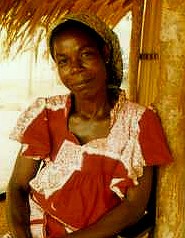
Photo Source:
Anonymous
|
Send Joshua Project a map of this people group.
|
| People Name: | Bete, Daloa |
| Country: | Côte d'Ivoire |
| 10/40 Window: | No |
| Population: | 307,000 |
| World Population: | 307,000 |
| Primary Language: | Bete, Daloa |
| Primary Religion: | Ethnic Religions |
| Christian Adherents: | 30.00 % |
| Evangelicals: | 8.00 % |
| Scripture: | New Testament |
| Ministry Resources: | Yes |
| Jesus Film: | Yes |
| Audio Recordings: | Yes |
| People Cluster: | Kru |
| Affinity Bloc: | Sub-Saharan Peoples |
| Progress Level: |

|
Introduction / History
Tucked into the forested interior of west-central Côte d'Ivoire, the Daloa Bete make their home in and around the Daloa subprefecture of the Sassandra-Marahoué District — a region whose very name honors the two founders of its principal city, one of them a Bete man named Gboto. Also known as the Northern Bete or Daloua Bete, this people group is one of several distinct Bete subgroups within the larger Kru ethnolinguistic family. Their language, Bete Daloa, belongs to the Kru branch of the Niger-Congo family and remains the heart language of daily community life, alongside French as the national language.
Bete oral history places their ancestors in the Sahel or West Sudanian savanna, from which warfare in the seventeenth century drove them southward into the forests of what is now southwestern Côte d'Ivoire. Once settled, they organized themselves into decentralized, clan-based villages rather than centralized kingdoms — a pattern that shaped their fierce independence and deep resistance to outside authority. That resistance expressed itself most dramatically against French colonial expansion, which the Bete met with sustained armed opposition until 1906, when their territory was finally absorbed into French West Africa. Colonial rule disrupted traditional structures, imposed forced labor, and pulled the Bete into a cash-crop economy they had not sought. The city of Daloa grew around them as a regional trading hub, becoming the third-largest city in the country, while the Bete remained a people defined more by village life than by urban ambition.
The Bete have also navigated a turbulent role in Ivorian national politics. The civil conflicts of the early 2000s cut through Daloa with violence, leaving scars on communities that are still healing. Former president Laurent Gbagbo, himself of Bete heritage, embodied both the group's political aspirations and the dangers of ethnopolitical polarization that have marked their recent history.
What Are Their Lives Like?
Village agriculture defines the rhythm of life for most Daloa Bete. Cocoa and coffee are the primary cash crops, linking rural families to global commodity markets in ways that bring both modest income and significant economic vulnerability. For household sustenance, families cultivate cassava, rice, plantains, and yams. Hunting and fishing provide important supplemental protein, reflecting older patterns of forest livelihood that still hold practical and cultural meaning.
Meals center on starchy staples — cassava and plantain prepared in various forms — served alongside sauces built from palm oil, peanuts, or vegetables. Attiéké, grated cassava fermented and steamed, is a staple across the region. Extended family life organizes daily existence, with elders holding authority and major decisions requiring clan input. Unlike the matrilineal Akan peoples to the east, the Bete trace inheritance and descent through the father's line, giving the patrilineage a central role in land rights and family identity.
Bete artistic life is vivid and deeply intertwined with community and spiritual ceremony. The gre mask — with its dramatically distorted features, bulging forehead, and grimacing expression — is among the most recognizable art forms in all of West Africa. Once worn in ceremonies following warfare or for the administration of customary justice, these masks today appear in a wider range of community celebrations, dances, and life-cycle events. Drumming is inseparable from Bete ceremony, and oral tradition — carried by storytellers who preserve genealogies, histories, and moral instruction — remains a living practice. Urbanization is gradually drawing younger Bete toward Daloa and beyond, where Western education and employment are reshaping expectations, though village traditions retain strong pull.
What Are Their Beliefs?
Ethnic religion is the dominant spiritual reality among the Daloa Bete, held by a strong majority of the community. At the center of this worldview stands Lago, the supreme creator God — acknowledged as the ultimate power behind existence, yet understood as remote and not directly worshipped or prayed to. Real spiritual attention flows instead toward the lesser beings who are thought to inhabit the living world: spirits residing in rivers, forests, and rocks, who can protect or harm, guide or afflict, depending on whether they are properly honored. Ancestors occupy an equally serious place in the Bete spiritual universe, regarded as present and active forces whose goodwill must be cultivated through offerings and ritual observance. These are not peripheral customs — they represent genuine and active trust placed in spiritual powers that the Bete believe govern the welfare of individuals and communities alike.
Masks and carved figures serve as instruments of this spiritual engagement, functioning as channels for ancestral spirits or natural forces rather than merely as art. A minority of Daloa Bete identify as Christian, primarily through Catholic and Protestant mission influence that took root during the colonial era. Yet even among those who bear a Christian identity, traditional spiritual commitments often persist beneath the surface, making deep discipleship an urgent need. The New Testament has been available in Bete Daloa since 1996, a significant resource — but access to God's word is only the beginning. Salvation and true spiritual freedom are found only in Jesus Christ, who alone has authority over every spirit, living and dead.
What Are Their Needs?
Many Daloa Bete villages lack reliable access to clean water, basic healthcare, and quality education, leaving families exposed to preventable illness and limited in their opportunities. The cocoa and coffee economy on which so many depend is subject to price volatility that can tip households from modest stability into real hardship with little warning. Road infrastructure remains poor in rural areas, isolating communities from markets and services. The civil conflict that swept through the Daloa region left wounds — both physical and relational — that continue to shape community life and trust.
Spiritually, the New Testament in Bete Daloa represents a remarkable open door. What is needed are workers willing to engage deeply with the language and culture, and Bete believers willing to move beyond nominal or mixed-faith identity into genuine discipleship rooted in Scripture. Fear of ancestral spirits and the spirit world is a daily reality for many, and the gospel's power to replace that fear with the peace of Christ is a message the Daloa Bete urgently need to hear and experience.
Prayer Points
Pray that the Bete Daloa New Testament would be read, heard, and believed — and that the Holy Spirit would use it to draw men and women out of fear of ancestral spirits and into the liberating knowledge of Jesus Christ.
Pray for workers with the cultural sensitivity and linguistic commitment to bring the gospel credibly and deeply into Daloa Bete village life, where oral tradition and relational trust are the primary means of communication.
Pray for Daloa Bete believers to be discipled in the fullness of the gospel — freed from the pull of traditional spiritual loyalties, grounded in the Word, and bold in witness to their own communities.
Pray for physical healing and reconciliation in communities still marked by civil conflict, and for economic stability among farming families whose livelihoods are tied to the uncertainties of the global cocoa market.