Eurasian in Netherlands
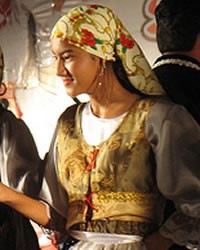
Photo Source:
MySabah.com
Used with permission
|
Send Joshua Project a map of this people group.
|
| People Name: | Eurasian |
| Country: | Netherlands |
| 10/40 Window: | No |
| Population: | 75,000 |
| World Population: | 1,758,700 |
| Primary Language: | Dutch |
| Primary Religion: | Christianity |
| Christian Adherents: | 85.00 % |
| Evangelicals: | 2.00 % |
| Scripture: | Complete Bible |
| Ministry Resources: | Yes |
| Jesus Film: | Yes |
| Audio Recordings: | Yes |
| People Cluster: | Southeast Asian, other |
| Affinity Bloc: | Southeast Asian Peoples |
| Progress Level: |

|
Introduction / History
The Eurasian or Indo people, called Indische Nederlanders in Dutch, and Orang Indo in Indonesian, are an ethnic group of mixed Indonesian and European heritage (mostly Dutch but also Portuguese, German, Belgian, and others). The group developed in the 16th century with Portuguese traders, and it expanded significantly under Dutch rule in later centuries. After Indonesian independence (1945-1949), large numbers of Eurasian families migrated to the Netherlands, continuing into the 1960's and shaping the modern Indo-Dutch population. Historically, most practiced Dutch Reformed or Lutheran Christianity or Roman Catholicism, with small communities practicing Judaism and Islam.
What Are Their Lives Like?
Their culture today is a blend of Dutch and Indonesian influences. Several of their dishes have become popular parts of Dutch cuisinary culture. Today, most Eurasian speak Dutch as their primary language. Their musicians, writers and performers are influential in Dutch culture. They celebrate an annual festival called Tong Tong Fair in The Hague. Their identity today is described as bicultural, cosmopolitan, strongly connected to family heritage, and proud of both their Dutch and their Indonesian roots.
What Are Their Beliefs?
Many Eurasian families have become less observant of their religion in modern times. However, cultural identity with those groups often remains strong even though formal practice has declined. Doctrine is less important to them, but traditions such as holidays, baptisms and funerals remain important. Older generations tend to be more observant than younger ones. Many identify as non-religious, yet observe religious traditions, while many also identify as spiritual but not religious.
There is some evangelical work amongst Eurasians, centered primarily on church planting, youth outreach, and community-based evangelism, and they have responded well.
What Are Their Needs?
Some Eurasians have described feelings of not fitting in fully with either Dutch or Indonesian culture, creating identity confusion. Racism based on skin tone is experienced by many.
Prayer Points
Pray that Eurasians feeling cultural identity crises will find a sense of belonging and acceptance in Bible-teaching churches.
Pray that Eurasian churches will experience revival and renewal.
Pray that Eurasians may experience a deep encounter with Christ.
Pray that Eurasian churches may grow strong and develop a vision to reach out to others and to take their place in fulfilling the Great Commission.