Erromangan in Vanuatu
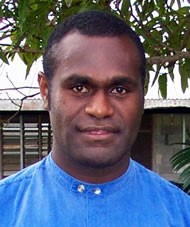
Photo Source:
Jim Stahl
|
Send Joshua Project a map of this people group.
|
| People Name: | Erromangan |
| Country: | Vanuatu |
| 10/40 Window: | No |
| Population: | 3,300 |
| World Population: | 3,300 |
| Primary Language: | Sie |
| Primary Religion: | Christianity |
| Christian Adherents: | 94.00 % |
| Evangelicals: | 44.00 % |
| Scripture: | New Testament |
| Ministry Resources: | Yes |
| Jesus Film: | No |
| Audio Recordings: | Yes |
| People Cluster: | Vanuatu |
| Affinity Bloc: | Pacific Islanders |
| Progress Level: |

|
Introduction / History
Erromango is the fourth largest island in the Vanuatu archipelago. Domestic animals such as pigs and chickens, along with food plants like yams and breadfruit, were brought by the first inhabitants. The first Europeans arrived in the early 1700s. Whaling ships and later, due to the large sandalwood reserve on the island, sandalwood traders became the next wave of visitors. Their arrival brought significant upheaval, including violence, disease outbreaks, and cultural disruption. Christian missionaries began to come in the mid-1800s. The acceptance of Christianity was slow, uneven, and deeply shaped by local choices. Missionaries introduced new tools, clothing, household objects, and building styles, which Erromangans selectively adopted into their lifestyle, blending Christian ideas with traditional beliefs until a hybrid form of Christianity that felt culturally authentic was produced.
What Are Their Lives Like?
Erromangan life today is a blend of kastom (customs, taboos, rituals, and ancient cosmologies) and Christianity. It's a mixture of the past and the present, yet not fully modern. It's a culture shaped by land, kinship, and community. People live in small coastal villages, where life is community-centered, slow-paced, and deeply tied to the land. Life heavily relies on subsistence gardening, fishing, and gathering of taro, yams, cabbage, and bananas, while fishing provides protein. Pigs and chickens are kept for food and ceremonies. Food is widely shared and eaten communally. Homes are built mostly from local materials. Villages have a church (usually Presbyterian), a primary school, a meeting ground, and sometimes a trade store. Much of the day is spent gardening, fishing, collecting firewood, cooking over open fires, visiting relatives, and participating in church activities.
What Are Their Beliefs?
Most Erromangans are Presbyterian; some are Catholic or part of smaller denominations. They participate in weekly worship and prayer and follow moral teachings, yet their faith has been shaped by local values of kinship and land-based spirituality. Land is sacred and is not seen as property but rather as an ancestor, a source of identity, and a spiritual responsibility. Blended with Christian ideas of spirits and angels is the belief that ancestors protect the living, influence health and fortune, and require respect through rituals. They hold both—honoring ancestors while following Christ—and ground faith in land, kinship, and community.
What Are Their Needs?
Food security is a major concern, as cyclones and drought can destroy crops. More resilient crops are needed, along with better tools and storage facilities and more reliable access to markets. Medical services are very limited. More trained nurses and midwives are needed, as well as medicine, supplies, and emergency transport, including boats and other vehicles. When clinics are far away, a simple infection can be life-threatening. Infrastructure is a constant challenge, as Erromango is remote. Education is one of the biggest hopes families have for their children, yet villages often only have primary school. More trained teachers are needed, along with supplies and scholarships. Their physical isolation affects everything and shapes life more than any other factor. Due to living difficulties, many young adults are pushed to migrate for education and work, deeply affecting their families and cultural communities.
Prayer Points
Pray that youth will take the gospel through music, sports outreach, and inter-village youth camps.
Pray that evangelism would include service, not just preaching.
Pray that families would look for and find ways to help others as an outreach expression of the love and acceptance of Christ within their community and in neighboring bay communities.