Awa, Mobuta in Papua New Guinea
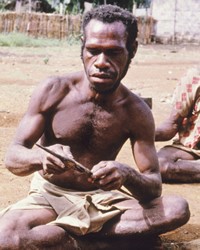
Photo Source:
Anonymous
|
Send Joshua Project a map of this people group.
|
| People Name: | Awa, Mobuta |
| Country: | Papua New Guinea |
| 10/40 Window: | No |
| Population: | 3,900 |
| World Population: | 3,900 |
| Primary Language: | Awa (Papua New Guinea) |
| Primary Religion: | Christianity |
| Christian Adherents: | 90.00 % |
| Evangelicals: | 11.00 % |
| Scripture: | New Testament |
| Ministry Resources: | Yes |
| Jesus Film: | Yes |
| Audio Recordings: | Yes |
| People Cluster: | New Guinea |
| Affinity Bloc: | Pacific Islanders |
| Progress Level: |

|
Introduction / History
The Mobuta Awa in PNG are an indigenous people living in the Eastern Highlands Province, particularly in the Kainantu and Okapa districts. Their communities are situated in mountainous terrain, where valleys, forests, and garden lands shape both settlement patterns and daily life.
They are part of the wider New Guinea cultural region, one of the most linguistically diverse areas in the world. The Mobuta Awa speak the Awa language, which is closely tied to their identity and has several dialects within the region.
Historically, their society has been organized around small, self-sustaining villages with strong clan relationships. Much of their history has been preserved through oral tradition. Over time, increased contact through missions, trade, and national development has brought change, while many traditional patterns of life continue.
What Are Their Lives Like?
The daily life of the Mobuta Awa centers on gardening and subsistence farming. Root crops such as sweet potatoes are commonly grown, along with other local foods that support family life. The surrounding land and forest provide essential resources for building, food, and daily needs.
Villages are typically composed of extended families, and social life is structured around kinship ties. Leadership is often informal and influenced by respect, experience, and the ability to guide others wisely. Cooperation within the community is essential for both survival and harmony.
Homes are built using locally available materials and are adapted to the highland environment. Travel between communities is often by foot along established paths. Language remains central to identity, with the Awa language used in daily life and other regional languages sometimes used for broader communication.
What Are Their Beliefs?
The Mobuta Awa are identified primarily with Christianity, and churches are present within their communities. Many would describe themselves as followers of Jesus Christ, and Christian teaching has had a meaningful influence on community life. Some put their faith in the spirit world as well as the finished work of Christ. The New Testament has been translated into the Awa language, providing an important resource for teaching, worship, and personal understanding of God's word.
What Are Their Needs?
Although Christianity is established among the Mobuta Awa, there remains a need for deeper spiritual maturity and clearer understanding of Scripture. Faith must continue to grow beyond identification into strong, grounded discipleship.
Church leaders would benefit from ongoing encouragement and biblical training so they can faithfully teach and shepherd their communities. Strengthening families in their understanding of God's word is also important for passing on the faith to future generations.
Continued engagement with scripture in the heart language is essential so that individuals can grow in a personal and obedient relationship with Jesus Christ.
Like many highland communities, they also face challenges related to education, access to resources, and maintaining their cultural identity while navigating outside influences.
Prayer Points
Pray that the Mobuta Awa would grow in a deep and faithful understanding of the gospel of Jesus Christ.
Pray for church leaders to be strengthened, equipped, and grounded in Scripture as they guide their communities.
Pray that the New Testament in their language would be widely read, clearly understood, and lived out in daily life.
Pray for families to be rooted in biblical truth and for younger generations to follow Christ wholeheartedly.
Pray for unity among believers and a strong witness that reflects the transforming power of the gospel.